
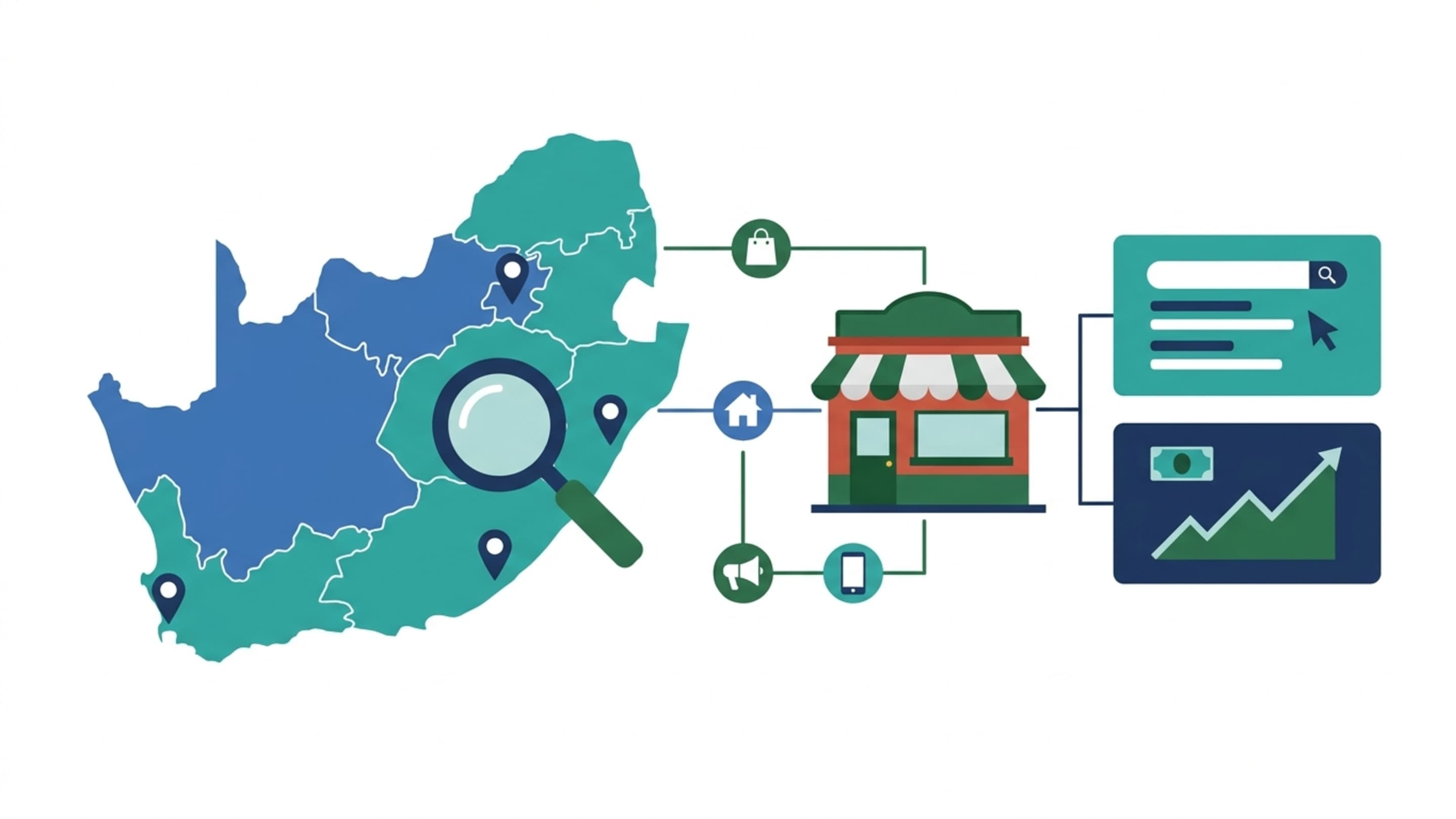
Understanding the Importance of Offline Conversions in Construction Advertising
For construction companies in Johannesburg, Facebook ads often do not close the deal on the platform. A homeowner may click an ad for a patio build, a developer may submit a quick enquiry form, or a facilities manager may message about a roofing repair, but the real revenue event happens later: after a site visit, a quote, a tender meeting, a deposit, or a signed contract. That delay is exactly why offline conversions matter. If you only optimise for leads captured inside Meta Ads Manager, you can end up rewarding the cheapest form fill rather than the enquiries that turn into profitable projects.
Construction buying cycles are naturally messy. A kitchen renovation in Sandton may involve a WhatsApp conversation, a WhatsApp voice note, two calls, an on-site measurement, and then a contract three weeks later. A commercial fit-out in Midrand may start with a project brief, move into procurement, and only convert once the project value is approved. Offline conversion tracking lets you connect those later-stage events back to the ad, so you can see which audiences, creatives, placements, and campaigns are actually contributing to booked work. That is a different conversation from vanity metrics like clicks or even lead volume.
In construction, the most useful Facebook metric is often not lead cost. It is cost per qualified site visit, quote accepted, or deposit received.
Prebo Digital’s performance approach is built around this reality. For service businesses with long sales cycles, we care about attribution accuracy, clean data flow, and revenue outcomes, not just platform-reported conversions. That is especially important in Johannesburg, where many construction firms sell high-consideration services across multiple suburbs and project types. If your data only shows the first enquiry, you cannot tell whether Facebook is driving small maintenance jobs or larger, margin-positive projects.
Offline conversions also help when your CRM or sales team carries the most important information. In construction, the sales team usually knows whether a lead was a tyre-kicker, a budget shopper, or a serious buyer. By sending that downstream data back into Meta, you can train the algorithm on higher-value outcomes instead of raw lead quantity. Over time, that can improve lead quality, audience selection, and budget allocation.
Can hide multiple touchpoints between first click and signed contract
A practical Johannesburg example: a contractor running Facebook ads for boundary walls may generate 120 leads in a month, but only 18 receive on-site assessments, 9 get quotes, and 4 convert. Without offline tracking, the campaign with the lowest cost per lead may look like the winner. With offline conversions, you may discover that a slightly more expensive campaign produced the majority of quote-accepted jobs. That is the level of clarity construction marketers need.
Setting Up Offline Conversion Tracking for Facebook Ads
The core principle is simple: capture a unique identifier at the point of lead generation, then pass later-stage outcomes back to Meta when those events happen offline. In practice, this usually means collecting fields such as email address, phone number, name, lead source, and the Meta click identifier where possible. When a prospect submits a Facebook lead form, fills in a website form, sends a WhatsApp enquiry, or calls your office, that record needs to be stored in a CRM or spreadsheet that your team can later match to a conversion event.
For construction businesses, the cleanest setup is usually a simple funnel with three stages: ad click, lead capture, and offline milestone. The milestone could be a booked site visit, issued quotation, contract signature, or deposit paid. The best stage depends on your sales process. If your quoting process is lengthy and your close rate is low, site visit may be a better optimisation signal than final sale. If your sales team is disciplined and you can reliably match deposits to leads, then deposit-paid is stronger.
| Construction funnel stage | What to record | Why it matters |
|---|---|---|
| Lead submitted | Name, phone, email, suburb, service type | Measures volume, but not quality |
| Site visit booked | Appointment date, salesperson, lead ID | Shows genuine buying intent |
| Quote accepted | Quoted value, service line, date | Closer to revenue than form fills |
| Deposit paid | Invoice value, payment date, project type | Best signal for ROAS analysis |
A typical implementation flow looks like this: set up your Facebook lead capture, add hidden fields or CRM tags for source tracking, export or sync your lead records, then upload offline events into Meta. Where possible, use the Conversions API or a CRM integration to reduce data loss from browser restrictions. This matters because construction leads often come from mobile users, and privacy settings, consent banners, and app switching can all break client-side attribution.
Ad click / lead form / WhatsApp enquiry ↓CRM or lead sheet records identity fields ↓Sales team qualifies lead ↓Offline event created: site visit, quote accepted, deposit paid ↓Event uploaded to Meta for attribution and optimisationIf your sales team does not log outcomes consistently, offline conversion tracking will only be as good as your CRM hygiene. Bad data in means misleading optimisation signals out.
In Johannesburg, a lot of construction firms rely on a combination of Excel, WhatsApp, and a sales rep’s memory. That may work operationally, but it is too fragile for performance advertising. A structured lead workflow does not need to be complex, but it must be consistent. Even a simple shared sheet with mandatory columns for source, project type, suburb, lead stage, quote value, and outcome date can create a far better reporting base than no system at all.
Best Practices for Facebook Ads Management in the Construction Sector
Construction campaigns perform better when the creative matches the actual job type and buying stage. A generic “we build everything” ad usually attracts broad, weak-intent traffic. A more useful approach is to segment campaigns by service line: renovations, roofing, paving, boundary walls, commercial maintenance, or fit-outs. This gives your team clearer data and helps you identify which services generate the strongest offline value. It also makes your sales follow-up more relevant because each lead lands in the correct pipeline.
Meta ads for construction should be designed around proof, not hype. Before-and-after images, short video walkthroughs, local project snapshots, and team-on-site visuals usually outperform stock imagery because they reduce perceived risk. The buyer is not just purchasing labour; they are trusting you with a home, a budget, and a timeline. If the ad feels too polished or too generic, it can actually lower trust. Real photos from Johannesburg projects often work better than abstract brand graphics.
Use one campaign objective per business outcome. Lead generation is useful for top-of-funnel volume, but offline tracking should decide which leads are worth scaling.
Budgeting should also reflect the length of your sales cycle. If your average quote-to-close time is 14 to 30 days, do not judge the campaign after three days of leads. Give the system enough time for offline conversions to flow back. A Johannesburg contractor with a ZAR 30,000 monthly ad budget may need to evaluate performance on a 30- to 60-day window before drawing conclusions about true cost per acquired client. That is because the first-week lead cost may look high or low for reasons that have nothing to do with final profitability.
Another best practice is to align your internal reporting with the same stages used in Meta. If your team tracks “qualified lead,” “site visit booked,” and “won” in the CRM, then mirror those stages in your offline event strategy. Do not create ten loosely defined stages that nobody can maintain. The point is to make attribution useful, not bureaucratic. At Prebo Digital, the most effective setups are usually the simplest ones that the sales team can actually sustain every week.
Finally, beware of over-optimising for cheap leads in lower-income areas if your real business model depends on larger projects in suburbs like Bryanston, Sandton, Fourways, or Bedfordview. The right audience is the one that produces profitable work, not the one with the lowest form fill cost. Offline conversion tracking helps you see that difference clearly, which is why it is so valuable in construction advertising.