
Prebo Digital

Google Ads Data to Improve Organic CTR: Mine Paid Queries, Then Rewrite the Snippet

A context-led playbook for using search terms reports and RSA asset performance as a copy-testing lab, so every organic title you rewrite is already validated against real search language.

Ads CTR Is Not Organic CTR

Two different SERPs, two different metrics. Stop conflating paid and organic click-through.

Mine the Search Terms Report

Real query phrasing, price and place modifiers become organic title copy inputs.

Position-Relative CTR Judging

Compare within query clusters and at similar positions before declaring a snippet rewrite a win.
5 min readGoogle Ads
Get a Quote
local-advertising-strategies — google-ads hero

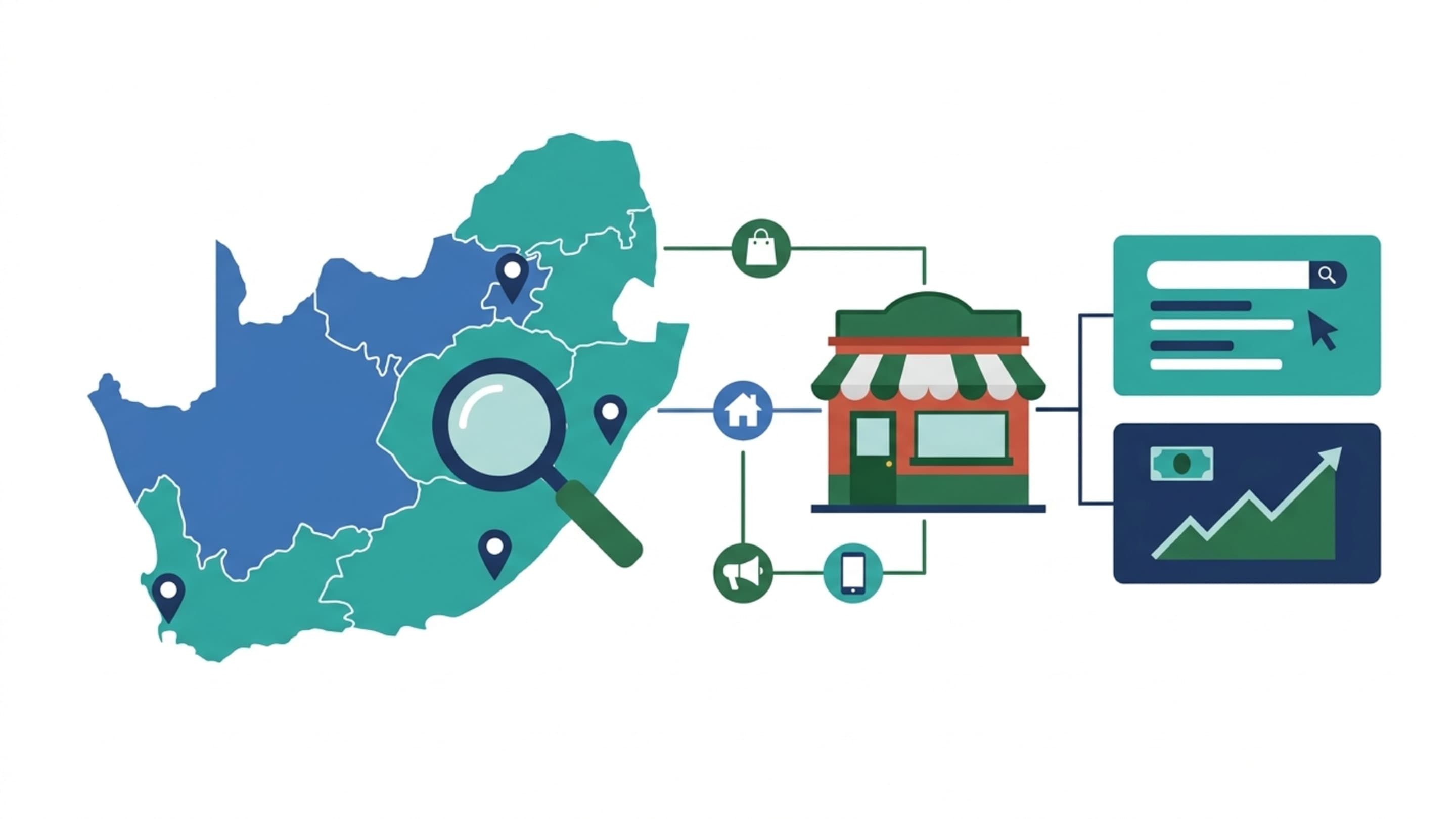
Picture a mid-sized South African Shopify or WooCommerce store selling industrial fasteners and power tools. Its Google Ads search terms report is a live transcript of how buyers talk: "grinder 230mm JHB", "drill bits PTA price", "cheapest angle grinder ZAR", even misspellings like "angle grander". Meanwhile the organic title tags read like a manufacturer catalogue: "Angle Grinder 230mm | Product Range | [Brand]". The store bids against real search language on one side of the business and ignores it on the other.

This playbook closes that gap with a repeatable loop: mine paid query data, validate phrasing inside responsive search ads, then rewrite the organic snippet with copy that has already earned clicks somewhere measurable.

The Misread This Article Corrects: Paid CTR and Organic CTR Are Not the Same Metric

In-house teams commonly treat Google Ads click-through rate as a proxy for organic CTR. They are not comparable. A paid ad competes with two or three other ads, carries a "Sponsored" label, and reaches a user often mid-purchase. An organic result competes with People Also Ask, local packs, shopping carousels and AI Overviews, with no label beyond its URL.

Paid CTR tells you which messaging earns a click under paid conditions. Organic CTR tells you which snippet earns a click against other organic results and SERP features. Use the first to inform copy, never as a benchmark for the second.

Why the SERP Snippet, Not the Page, Decides Whether You Get the Click

Your landing page can convert beautifully and still lose the visit, because the click decision happens before arrival. The title link and meta description are the whole product on that screen. Per Google's documentation on title links, Google may rewrite your title when it believes a different one better matches the query. The snippet is a negotiation, not an instruction - which is why testing copy where you get hard performance data first is worth the effort.

Which Google Ads Reports Actually Give You Organic Copy Inputs

  • Search terms report - the real queries that triggered your ads, including modifiers, misspellings and place abbreviations.
  • Responsive search ad asset reporting - which headlines and descriptions performed (see About Responsive Search Ads). This is your cheap A/B lab.
  • Search impression share - where high paid impression share meets weak organic visibility, you have an intent gap worth a title rewrite and often a new page.

Reading the Search Terms Report for Title Language: Modifiers, Misspellings and Local Vernacular

Do not just extract nouns. Extract modifier patterns. In the South African market we consistently see place abbreviations (JHB, PTA, CPT), currency framing ("price", "ZAR", "under R500"), servicing intent ("repair", "spares", "same day"), and genuine misspellings that reveal the user's vocabulary level. Each pattern is a snippet input. If a meaningful share of paid queries carries same-day intent, a title that omits urgency leaves clicks on the table.

Judging Whether a Snippet Rewrite Worked: Position-Relative CTR, Not Raw CTR

A snippet rewrite is an experiment and raw CTR is a bad referee. Moving from position 7 to position 4 will lift CTR with identical copy, and seasonality will do the same. Compare only within a query cluster and at a similar average position band.

CTR = clicks / impressions

Judge per cluster, not per page:
  cluster CTR = sum(cluster clicks) / sum(cluster impressions)
  compare only against pre-change CTR in the SAME position band
  flag: seasonality, SERP feature changes, Google-rewritten titles
Query clusterPosition bandBeforeAfterConfounders to log
"angle grinder 230mm" family4-6CTR snapshot, 28 daysCTR snapshot, 28 daysPosition drift, new PAA block
Branded1-2BaselinePost-changePaid brand bids running

The Google title-rewrite problem: if Google serves a different title link than the one you wrote, your edit may not be the thing that changed. Check the live SERP before crediting or blaming your tag. Google's guidance on controlling snippets is explicit that control is partial.

Cluster-Level CTR Comparison: Grouping Queries Before You Compare

Group queries by intent family and modifier pattern, then aggregate clicks and impressions before dividing. Averaging per-query CTRs weights tiny queries equally with high-volume ones and distorts the result.

Rich Results and Structured Data as Snippet-Level CTR Levers

Price, availability and review markup change the visual footprint of a result independently of your title copy. In a controlled snippet test, keep markup constant between the before and after periods, otherwise you cannot isolate the copy effect.

Hypothetical South African Scenarios: When Paid Query Data Repoints Organic Copy

Consider a Cape Town tool retailer whose paid queries cluster around "delivery CPT" and "same day". If its organic titles are pure product names, the paid evidence argues for a transactional, delivery-led snippet. A B2B fastener supplier where paid search terms show "bulk" and "account pricing" should signal trade pricing, not consumer framing. Both are illustrative, not measured outcomes - the point is that the decision is data-led rather than taste-led.

Where AI Overviews Change the Click-Through Calculation

Per Google's documentation on AI features, informational queries increasingly resolve on the results page. A snippet rewrite may lift CTR sharply on transactional and branded clusters while barely moving on informational ones - a reason to segment, not to abandon the work.

Measuring Honestly in Search Console: Seasonality, Position Drift and Attribution Noise

Sources

Get a Quote

Why Choose Us

Here's what sets us apart

  • 500+ Expert Articles

    A content hub covering SEO, paid media, CRO and web design for South African businesses.

  • 200+ Success Stories

    Campaigns and builds delivered across retail, services, B2B and ecommerce.

  • 200+ Happy Clients

    Businesses that trust Prebo Digital with their digital growth.

  • 4.9 Average Rating

    Rated 4.9 out of 5 across verified Google reviews.

  • 24h Response Time

    Questions answered within one business day, every time.

  • Google Premier Partner

    Premier Partner status since 2022, placing us in the top 3% of agencies.

  • Amazon Verified Partner

    One of the first verified Amazon Ads partners in South Africa.

  • Meta Business Partner

    Certified to run paid social across Facebook, Instagram and beyond.

What Our Clients Say

Don't just take our word for it

Featured

“Great service and professional team.”

ES
Emelda Schuster
Featured

“Shout out to Leesha @Prebo Digital for great diligence and care handling our Google Ads account. Other agencies take your money and do nothing until you ask. Not Leesha & Prebo Digital. They do what they say and show up with a friendly face. Work to fix issues. Highly recommended.”

BS
Bradley Schmidt
Featured

“Excellent service and support.”

DB
Des Brown
Featured

“Very skilled and knowledgeable in the digital industry and you understand the importance of budgets. Start-ups do not have hundreds of thousands to spend at first and you guys really make the most of every budget provided.”

CS
Cat street
Featured

“Prebo will take your business to the next level. Extremely smart people, great service. Always go above and beyond.”

MG
Mike Gray
Featured

“A dedicated, knowledgeable and enthusiastic team of individuals that are determined to see your brand grow!”

AW
Alastair Waldeck
Featured

“A great agency to work with that always provides excellent service. Very professional and dedicated team.”

LV
Lynelle van Niekerk
Featured

“In the 4 months since we joined hands with Prebo our leads quantity and quality has increased with much more direct impact on our target market. The team is on point and forever in contact with new ideas and solutions to maximize our potential within the set budget cap. Very innovative group of people!”

RB
Rikus Booyens
Featured

“Great service from Prebo Digital team.”

MC
Mothusi Calvin Mogorosi
Featured

“Great Agency - growth-minded, a diverse team of talented individuals with collaborative success at its heart”

DD
David Delaney
Featured

“Outstanding digital marketing services.”

DD
DUNCAN DUNSHAM
Featured

“Industry experts!”

RB
Ricardo Banda
Featured

“Excellent work and professional service.”

MM
Menzi Mohale
Featured

“Expertise, ethos, excellence”

AJ
Andrew Johnson
Featured

“Professional and reliable service.”

ED
Ebert Du Plessis
5.0/ 5
15 reviews

Keep reading

Related Articles

google-ads-agency — google-ads heroGoogle Ads

Local Google Ads and SEO in Gauteng: Winning the Map Pack Across Multiple Suburbs and Cities

Context: Four Branches, Two Targeting Systems That Never Agree A home-services group with branches in Sandton, Centurion, Benoni and Krugersdorp finds its Google Ads bidding on suburbs it cannot service, while its Google Business Profile (GBP) ranks for areas it does not target. Ads location settings and GBP service areas run on different assumptions: Ads targets where users are located or show interest, GBP defines where you serve. When they disagree, budget leaks and local visibility suffers. Until you reconcile these systems, every rand spent on local search risks chasing a postcode you cannot profitably serve. A Pretoria dental group with three clinics within 20 km cannibalises its own Ads and map pack rankings because catchments overlap. Location bid modifiers can separate them, but only after you define each branch's true service radius. Why 'Gauteng' Is a Targeting Mistake Before It Is a Strategy Mistake Gauteng is 15 million people across three metros and dozens of suburbs. Treating it as one market blurs budget and floods ads into areas you cannot service quickly. Within Johannesburg alone, Sandton, Soweto, Randburg and Midrand have different competitive dynamics. A single 'Gauteng' campaign cannot distinguish a Benoni homeowner needing plumbing from a Sandton office needing after-hours IT support. Treat these as separate markets: Johannesburg (Sandton, Soweto, Randburg, Midrand), Pretoria (Centurion, Pretoria East), Ekurhuleni (Benoni, Boksburg) and the West Rand (Krugersdorp). Google's location targeting documentation explains the settings; mapping them to your business is yours. Presence or Interest vs Presence Only The default 'presence or interest' setting shows ads to people in, or showing interest in, your targeted locations - a Soweto user searching 'plumber' could see your Sandton ad. For local services, switch to 'presence only' to restrict ads to people physically in your target area. For fixed-location businesses like a dental clinic, presence only is usually correct; for delivery or remote services, presence or interest may capture out-of-area demand. Validate that location targeting matches operational capacity. Serving a lead you cannot reach in reasonable time erodes margin and ruins reviews. Radius vs Polygon: Setting a Realistic Catchment Radius targeting draws a circle around an address, set in kilometres in South Africa. A 15 km radius around a Benoni branch might include parts of Boksburg and Brakpan but exclude Springs. If your average travel time is 30 minutes, 15 km is more realistic than 25 km in peak traffic. Use the radius tool to visualise branch overlaps; for irregular areas, combine radius with postal code targeting. Test radii in a draft campaign and use the 'Locations' report to see where ads actually served. Adjust on cost per qualified lead, not clicks. Location Bid Modifiers and Multi-Branch Cannibalisation

Nov 17, 20265 min read
Read more
google-ads-services — google-ads heroGoogle Ads

SEO and Google Ads Data Synergy: Building One Joinable Dataset Across Search Console, Ads and GA4

Context: The Two Dashboards That Never Join A mid-sized South African e-commerce store has an SEO lead reporting impressions and average position from Search Console, and a paid lead reporting ROAS from Google Ads. Neither report answers the real question: which converting paid search terms are also organic queries where the brand sits two positions from a profitable click? This guide is about data plumbing - building one joinable dataset from SEO and Google Ads sources so decisions come from reconciled numbers. Why SEO and Google Ads Data Disagrees Before You Touch It Three structural reasons the numbers never match exactly: Search Console anonymises low-volume queries and caps export rows, so tail terms vanish. The Ads search-terms report aggregates by match type and omits low-volume terms. GA4 attributes sessions and conversions by its own model, on different clocks and rules. Source Shows Hides Search Console Query, page, impressions, clicks, avg position Low-volume queries; capped rows; no conversion value Ads search-terms Matched terms, cost, clicks, conversions Low-volume terms; aggregated by match type; no organic data GA4 events Session source, landing page, engagement, key events Pre-consent detail; organic keyword (not provided) The Synergy Layer: Designing a Query × Page × Channel Table The deliverable is one table where each row is a query, a landing page, and a channel, with shared columns: query_page_channel query -- normalised, lowercased landing_page -- path only channel -- organic | paid clicks impressions cost_zar -- paid only sessions key_events revenue_zar avg_position -- organic only Choosing Your Join Key: Why Landing Page Beats Keyword String Joining on the keyword string is tempting but brittle - paid match types, close variants and organic phrase variations break string joins. Join on landing page path plus a normalised query instead. Tip: lowercase queries and strip trailing slashes on pages before the join. Document the rule so future analysts reproduce it. Where the Plumbing Breaks: Consent Mode, Server-Side Tagging and Lost Rows Consent Mode changes what arrives in your dataset. Users who decline send modelled or cookieless pings, and if GA4 or Ads is not set up to handle this, rows never appear - your join looks clean but silently under-counts. Server-side tagging through a cloud container improves accuracy and first-party resilience, but only if consent signals pass through consistently. Warning: a clean join on incomplete data is worse than a messy join on complete data. Audit consent state distribution before trusting any synergy metric. POPIA and GDPR: What Happens to the Synergy Layer When Consent Strips Query Data Under POPIA in South Africa and GDPR in the UK/EU, query-level and user-level data must be handled lawfully. Aggregate at the query × page × channel grain rather than the individual user grain, keep retention periods defensible, and document your lawful basis. Do not attempt to re-identify anonymised Search Console queries - treat the row limit as a compliance feature, not a bug.

Nov 17, 20265 min read
Read more
seo-and-google-ads-integration — google-ads heroGoogle Ads

Google Ads Quality Score and SEO Impact: What Your QS Column Actually Says About Landing Pages

Context: The Marketing Manager Told to 'Lift Quality Score to Lift Rankings' A performance marketer at a mid-sized South African e-commerce brand is told: “Our Google Ads Quality Score is stuck at 5/10 - fix it and our organic rankings will follow.” The logic sounds plausible - Google owns both systems - but it misreads what Quality Score (QS) is. QS is a paid-side diagnostic, not a ranking lever for SEO. QS is a paid-side metric. Organic rankings are governed by a separate system. Treating one as a cause of the other wastes effort and budget. What Google Ads Quality Score Actually Measures (and What It Doesn't) Per Google Ads Help, QS is a 1-10 diagnostic estimate of how relevant your ads, keywords, and landing page are to a person seeing your ad. It has three components - expected CTR, ad relevance, and landing page experience - each rated “Above average,” “Average,” or “Below average.” QS is reported only for keywords with sufficient impressions and is not a live auction input; real-time Ad Rank combines bid, ad quality, ad format, and context. The QS you see is a historical summary, not a lever. QS does not measure organic factors such as backlinks, content depth, E-E-A-T, or site architecture. It is a keyword-level paid diagnostic. The Three Components and the One That Touches SEO: Landing Page Experience Landing page experience is the only QS component with a plausible SEO connection. Google describes it as how well your page provides relevant, useful, easy-to-navigate content - considering query relevance, transparency (clear business identity and contact info), navigation, and mobile usability. Speed matters, though less than relevance. These inputs overlap with organic page experience: Core Web Vitals (LCP, INP, CLS), mobile-friendliness, HTTPS, and intrusive interstitials. But overlap is not causation. A page can pass organic page experience yet rate “Below average” on paid landing page experience if content misses the ad's keyword intent - and vice versa. Where Quality Score and Organic Ranking Genuinely Overlap - and Where They Don't The overlap is real but narrow: both reward fast, mobile-friendly, transparent, relevant pages. Organic ranking also depends on content quality, links, and query intent - signals absent from QS. QS incorporates expected CTR and ad relevance, which have no direct organic equivalent. Warning: Do not infer that improving QS will improve organic rankings. The systems share inputs but operate independently. Use QS as a diagnostic for page issues that might also affect SEO. Does a Higher Quality Score Improve Organic Rankings? A Straight Answer No. There is no evidence Google uses QS as an organic ranking factor. Search and Ads are separate systems with distinct algorithms. Any correlation you observe likely stems from shared page quality or engagement - not QS acting on SEO. Why the Quality Score Number Itself Is a Lagging, Historical Proxy QS is computed over a trailing window and only for keywords with sufficient data, so it lags changes by weeks. The single 1-10 number also masks the component breakdown: two keywords at 6 can have opposite profiles. For diagnosis, component ratings matter far more than the aggregate. Profiling Quality Score by Landing Page, Not by Keyword Landing pages often serve many keywords across campaigns. Pivot QS data by landing page URL and aggregate component ratings across all keywords pointing to the same URL. A page with consistently “Below average” landing page experience signals a page-level problem - poor relevance, missing transparency, slow load - that likely affects organic performance too. This turns a keyword-level metric into a prioritized page-fix list.

Nov 16, 20266 min read
Read more
Professional pay per click advertising south africa imageGoogle Ads

Pay-Per-Click Cost in South Africa: A Realistic Budget Playbook for 2025

Why Your 'Average CPC' Tells You Nothing About Your Actual PPC Cost Blog posts quote an 'average CPC in South Africa' of R15 or R25. Plug that into a spreadsheet and your effective cost per acquisition (CPA) often lands at three times the estimate. The 'average' masks the real cost stack: media, CPC drivers, conversion friction, and hidden operational costs. In South Africa, with lower search volumes and distinct competitive clusters, averages are especially misleading. A hypothetical Johannesburg B2B SaaS company selling workflow software at R2,500 per month targets 'workflow automation' and 'business process software'. Keyword Planner suggests a top-of-page bid of R18-R30; at a 2% landing page conversion rate, CPA is R900-R1,500. Budgeting on a R15 average CPC underestimates true cost by 40-200%. Key insight: A low CPC on a poorly converting landing page can be more expensive than a high CPC on a page that converts above 5%. The PPC Cost Stack: Four Layers That Determine What You Really Pay Media spend - the clicks you buy. CPC drivers - auction dynamics, Quality Score, audience signals. Conversion efficiency - landing page experience, offer strength, tracking accuracy. Operational overhead - ad management fees, creative production, tracking infrastructure, POPIA-compliant consent. Ignoring layers 3 and 4 is the most common budgeting error. A R10 CPC at 1% conversion costs R1,000 per conversion; a R25 CPC at 5% costs R500. The second is cheaper. CPC Drivers: How the Auction, Quality Score, and Audience Shape Your ZAR Click Price Your actual CPC depends on competitors' bids, ad rank, and extensions. Quality Score (expected CTR, ad relevance, landing page experience) can lower CPC by 20-50% versus an identical bid. In South Africa, lower search volumes mean small relevance changes swing impression share significantly. A broad match national keyword may cost R20 per click, while a phrase match keyword with an RLSA bid adjustment may cost R12 and convert at twice the rate. Use Quality Score diagnostics to find where relevance leaks budget. Benchmark Ranges for South Africa: CPC, CPM, and Minimum Monthly Spend by Platform Directional 2025 ranges synthesised from global benchmarks and campaign experience. Treat these as planning ranges, not guarantees. Platform Typical CPC (ZAR) Typical CPM (ZAR) Minimum Viable Monthly Spend (ZAR) Google Search (B2B) 15-40 - 15,000 Google Search (e-commerce) 8-25 - 12,000 Meta (Facebook/Instagram) 5-20 80-250 10,000 LinkedIn 40-120 150-400 20,000 For a precise forecast, use Google's Keyword Planner with location set to South Africa. The Hidden Cost Drivers: Tracking, Consent, and Creative That Inflate Your Effective CPA Two silent budget killers: inaccurate tracking and compliance gaps. If conversion tracking misses 20% of sales due to cookie restrictions or consent mode misconfiguration, reported CPA is artificially low and you overspend on underperformers. POPIA requires explicit consent for tracking personal data; a compliant banner can reduce data capture but improves data quality when implemented correctly. Creative is another line item: a single video ad may cost R5,000-R15,000, and if it fatigues in two weeks your effective CPC rises. Budget for systematic creative testing. For more, see our reporting approach .

Nov 14, 20266 min read
Read more

Get Google Ads Consultation

Speak with our Google Ads specialists. Free Google Ads account audit (worth R1,500).

GET FREE ADS STRATEGY

Need Help?

Office 17, Block A, Willowbrook Office Park, Roodepoort, 1724

Why Choose Us for Google Ads

What working with Prebo Digital gets you on every Google Ads project

300% ROAS Average

Campaigns average a 300% return on ad spend across R50M+ in managed budget.

Google Premier Partner

Premier Partner status places us in the top 3% of agencies in the country.

Advanced Analytics Setup

Conversion tracking and GA4 configured properly from day one, not months later.

Rapid Campaign Launch

New campaigns built, reviewed and live in days rather than weeks.

Why Choose Us

Here's what sets us apart from the competition

500+ Expert Articles

A content hub covering SEO, paid media, CRO and web design for South African businesses.

200+ Success Stories

Campaigns and builds delivered across retail, services, B2B and ecommerce.

200+ Happy Clients

Businesses that trust Prebo Digital with their digital growth.

4.9 Average Rating

Rated 4.9 out of 5 across verified Google reviews.

24h Response Time

Questions answered within one business day, every time.

Google Premier Partner

Premier Partner status since 2022, placing us in the top 3% of agencies.

Amazon Verified Partner

One of the first verified Amazon Ads partners in South Africa.

Meta Business Partner

Certified to run paid social across Facebook, Instagram and beyond.

Frequently Asked Questions

Find answers to common questions

Google Ads can drive qualified traffic to your website, increase brand visibility, and generate measurable results.

We craft tailored strategies, conduct in-depth keyword research, and create compelling ad copy to maximize visibility and engagement.

As a Google Premier Partner, we offer advanced support and insights, ensuring your campaigns are optimized for success.