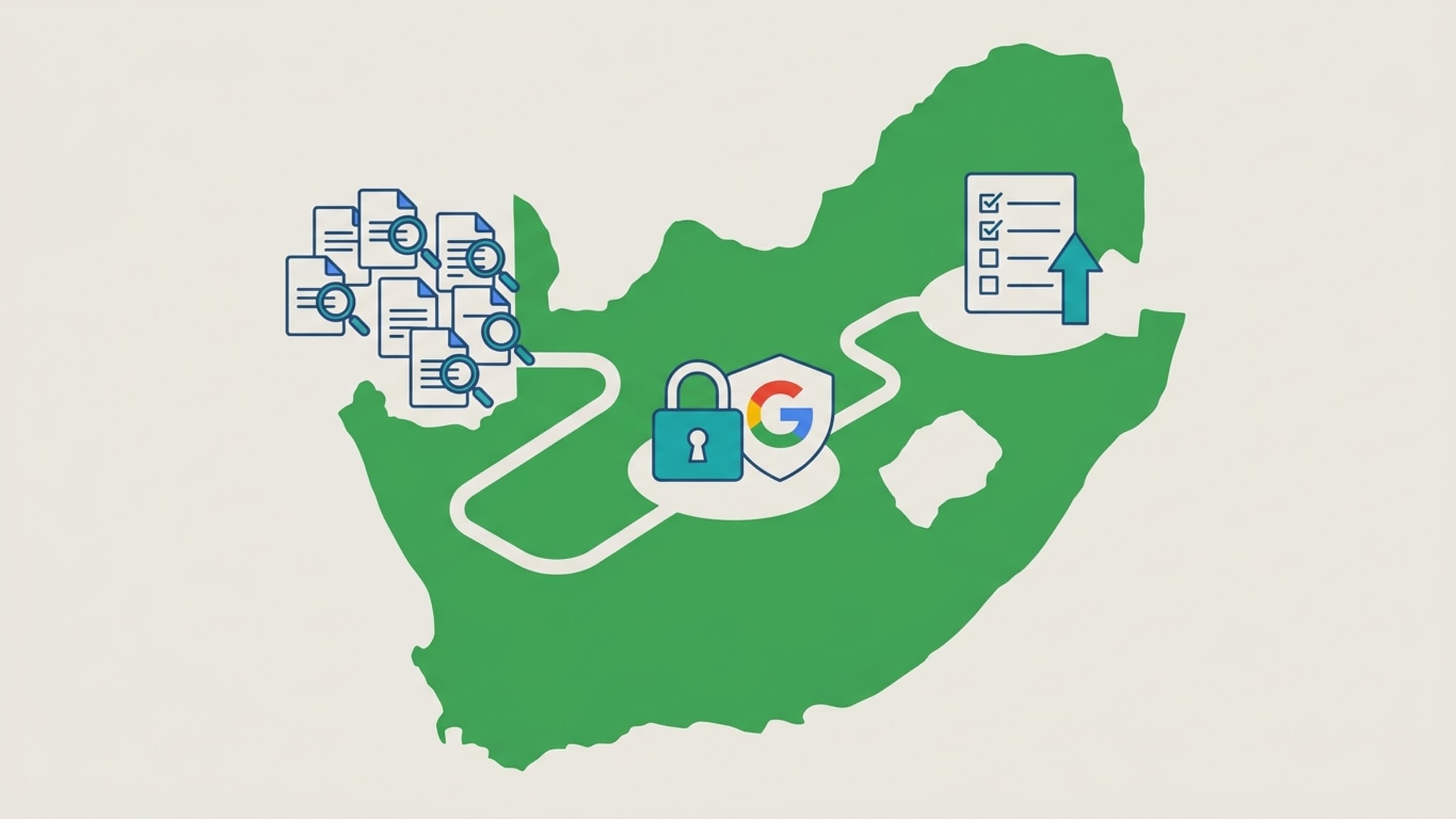

Context: What changes when search results become more AI-mediated
Picture a South African e-commerce team that used to win search traffic with a steady mix of category pages, buying guides, and technical clean-up. Then, over a few months, the team notices something uncomfortable: rankings are still present in the classic sense, but fewer clicks are arriving from the same positions. Some queries now return richer answer blocks, AI summaries, deeper product comparisons, and more intent-specific results. The problem is no longer just “How do we rank?” It is “How do we remain the most useful source when search engines are doing more of the interpretation for the user?”
That is the practical way to think about how AI is affecting SEO. It is not only changing the tools marketers use; it is changing the way search engines classify intent, assemble answers, and decide which pages deserve visibility at each stage of the funnel. For marketing directors, e-commerce managers, and B2B teams, this shifts the SEO job from keyword targeting alone to information design, entity clarity, content trust, and technical hygiene. In other words, the winning pages are increasingly the ones that machines can understand quickly and users can trust immediately.
For Prebo Digital clients, this usually means the strongest SEO gains come when content, analytics, and conversion tracking are treated as one system rather than three separate workstreams.
There is also a commercial reality behind the trend. If AI reduces clicks on some informational queries, that does not automatically mean SEO is less valuable. It means your SEO strategy must work harder on the queries that still drive revenue, and your content needs to qualify its place in the journey more precisely. A page that attracts 15% fewer visits but produces stronger assisted conversions can still be a better business asset than a high-traffic page with weak purchase intent. That is why the conversation should focus less on raw traffic volume and more on qualified demand, brand search lift, and contribution to revenue.
must now serve both human readers and AI-driven search interpretation
AI-Driven Search Algorithm Transformations
AI is reshaping SEO at the algorithm level in three important ways. First, search systems are better at understanding semantic meaning instead of matching only exact keywords. Second, they are more capable of mapping subtopics, entities, and context across a page or site. Third, they increasingly infer whether content is genuinely helpful by looking at usage patterns, topical depth, and trust signals rather than just presence of a term. For SEO teams, that means content architecture and internal linking have become more strategic than ever.
In practice, this affects how pages are grouped and retrieved. A legacy site that spreads the same topic across thin blog posts, product pages, and service pages without clear hierarchy will confuse both users and search systems. An AI-aware search engine is far more likely to reward a site that clearly separates definitions, comparisons, use cases, and transaction pages, because the structure makes intent easier to resolve. This is especially relevant for SaaS and e-commerce brands in South Africa that operate across multiple markets and currencies, where the same phrase can imply different buying intent depending on geography and audience maturity.
What changes in the ranking model
The biggest shift is that search engines do not simply “read” a page; they interpret it. That interpretation is influenced by the entities you mention, the relationships between those entities, and the context surrounding them. For example, a page about conversion rate optimisation becomes more credible if it includes the platforms, metrics, and processes associated with the discipline: GA4, server-side tagging, A/B testing, checkout friction, and paid traffic quality. AI-based systems can distinguish between a generic overview and a page that actually demonstrates operational knowledge.
This also changes how we think about topical authority. It is no longer enough to publish one long article and expect relevance across a broad topic. AI systems tend to favour depth, consistency, and coherent site-wide structure. If you sell on Shopify, for instance, your SEO content needs to acknowledge product schema, collection page architecture, inventory signals, and internal linking patterns. If you are a B2B SaaS business, your content must distinguish between awareness-stage education, comparison-stage evaluation, and demo-request intent. That specificity helps both search interpretation and conversion.
| SEO signal | Traditional reading | AI-aware reading |
|---|---|---|
| Keyword use | Exact match frequency | Semantic coverage and intent match |
| Internal links | Navigation support | Topic graph and page relationships |
| Content depth | Word count proxy | Coverage of sub-intents and entities |
| Trust signals | Basic author bio | Evidence, structure, citations, and consistency |
A common mistake is to respond to AI search changes by publishing more content without improving structure. More pages with the same weaknesses usually increases noise, not visibility.
Utilizing AI as a Predictive Tool
One of the most useful ways to apply AI in SEO is not as a writing shortcut, but as a forecasting layer. When used carefully, AI can help identify query clusters that are likely to grow, spot content decay earlier, and highlight pages where user intent is shifting faster than the content can keep up. That matters because SEO is often slow to react. By the time a human team notices a theme everywhere, competitors may already have captured the early search demand.
At Prebo Digital, the most practical AI-assisted forecasting usually starts with search console data, crawl data, and conversion data, then layers pattern detection on top. The aim is not to ask AI to “find keywords” in a vacuum. The aim is to ask it to detect anomalies: which pages are losing clicks despite stable impressions, which topics are rising in branded search volume, which content clusters are overexposed to informational traffic but underexposed to commercial intent, and which pages deserve refreshes before the decline becomes visible in revenue.
That predictive angle is especially valuable for brands with long buying cycles, including B2B software, industrial services, and high-consideration e-commerce. If you know that comparison queries and implementation queries are starting to rise, you can create those assets before demand peaks. If your AI analysis shows that mobile visitors from non-brand searches convert at half the rate of branded traffic, you may prioritise landing page refinement over more content production. This is where AI becomes a planning tool rather than just a content tool.
Predictive SEO works best when the output is tied to a business decision: refresh a page, build a new cluster, improve internal links, or protect a declining revenue page.
A useful operating model is to segment predictive signals into three buckets. First, demand signals, which show that a topic is heating up. Second, performance signals, which show that a page is underperforming relative to opportunity. Third, conversion signals, which show that a page is attracting the right users but failing downstream. If AI only tells you what is trending, it is incomplete. The real value appears when it helps you decide where the next rand should go.
Automation: Streamlining SEO Tasks
Automation is the most visible AI benefit in SEO, but it is only useful when it removes repetitive work without diluting editorial judgment. The tasks that usually benefit first are crawl monitoring, metadata drafting, SERP pattern extraction, content brief generation, and anomaly detection in rankings or traffic. For larger sites, automation can also support internal linking recommendations, schema checks, and page-level prioritisation at scale.
This is where many teams overreach. They assume AI should replace the strategist, when in reality it should reduce friction in the production system. For example, a content team can use AI to produce a first-pass outline from top-ranking pages, but the final structure should still be shaped by search intent, product positioning, and conversion objectives. Similarly, AI can identify missing entities on a page, but a human should decide whether those entities truly matter to the reader or are just algorithmic noise.
| SEO task | Manual effort | AI-assisted approach |
|---|---|---|
| Metadata drafting | Write from scratch for each page | Generate drafts, then refine for intent and compliance |
| Content gap analysis | Manual SERP review across many pages | Cluster missing subtopics using similarity analysis |
| Technical audits | Periodic human crawl checks | Continuous monitoring with prioritised alerts |
| Internal linking | Ad hoc editorial linking | Pattern-based recommendations by topic cluster |
For e-commerce and marketplaces, automation is especially useful in keeping product and collection pages current. AI can flag when titles are too similar, when descriptions do not differentiate variants, or when an important category has weak internal link support from supporting content. For service businesses, it can help ensure that location, service, and industry pages do not collapse into generic copy. These are not glamorous tasks, but they often produce the compounding gains that improve crawl efficiency and conversion paths over time.