
What Are Local Advertising Strategies?
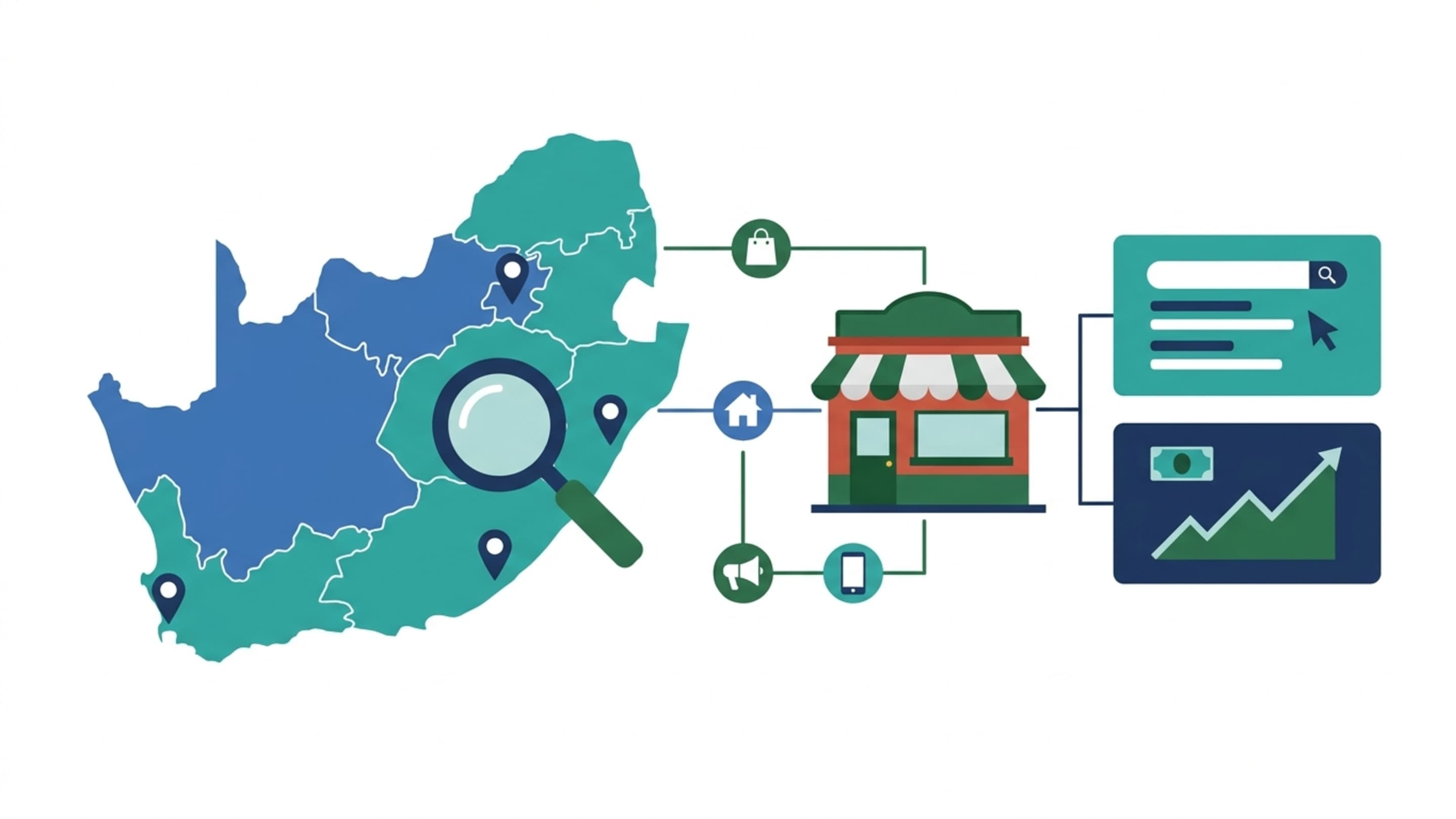
Local advertising strategies are marketing tactics designed to target customers within a specific geographic area—often a city, suburb, or even a few blocks around a physical store. For South African small and medium enterprises (SMEs) and local businesses in 2026, these strategies are essential to drive foot traffic, increase brand awareness, and compete with larger chains. Whether you run a café in Cape Town, a spaza shop in Soweto, or a service business in Durban, local advertising helps you reach the right people at the right time.
Why Local Advertising Matters in South Africa in 2026
South Africa's advertising landscape has shifted dramatically. Digital advertising spend reached R17.7 billion in 2023, up 21.5% from the previous year, and growth continues in 2026. Television advertising has declined from third to twelfth place in marketer preference, with only 6% planning to increase TV spend. Meanwhile, consumers—especially in townships—are prioritising value over brand loyalty. A 2023 report found that 59.3% of township consumers choose products based on price, and 51% shop at spaza shops daily. These shifts demand hyper-local, value-driven advertising that meets customers where they are.
Key Local Advertising Channels for South African Businesses
Local SEO & Google Business Profile
A well-optimised Google Business Profile is free and the backbone of local visibility. Ensure your listing includes accurate hours, location, phone, and photos. Encourage reviews—respond to every one. For service-area businesses, use localised landing pages targeting suburbs like Sandton, Durbanville, or Umhlanga.
Google Local Services Ads (LSAs)
LSAs appear at the very top of search results for local service queries (e.g., "plumber in Randburg"). You pay per lead, not per click, and your listing is verified with a Google Guarantee badge. This builds trust—critical for SMEs competing with established players.
Social Media Geo-Targeting
Facebook, Instagram, and TikTok allow you to target users within a 1–10 km radius of your business. Use video content—short-form videos dominate engagement in 2026. Showcase your products, share customer testimonials, or run limited-time offers exclusive to followers within a specific area.
Digital Out-of-Home (DOOH) Advertising
DOOH has matured rapidly in South Africa, with programmatic buying enabling real-time ad placement on digital billboards, taxi ranks, and mall screens. For example, a restaurant in Rosebank can display a lunch special on digital screens near office parks during 12:00–14:00. Combine DOOH with mobile retargeting to nudge commuters who saw your ad.
Local Partnerships & Community Events
Sponsor a local sports team, host a pop-up market, or collaborate with neighbouring businesses. These low-cost tactics build word-of-mouth and strengthen your local brand affinity. Remember the township insight: 51% of consumers shop at spaza shops daily—leverage these high-traffic points for distributing flyers or samples.
SMS & WhatsApp Marketing
SMS open rates exceed 90%. Use SMS or WhatsApp broadcasts to inform loyal customers about weekly specials, new stock, or location changes. Keep messages short and include a clear call-to-action. Combine with a loyalty program to reward repeat visits.
Common Pitfalls to Avoid
- Overinvesting in Traditional Media: Television and print continue to lose effectiveness. In 2026, allocate budget to digital channels where your local audience actually engages.
- Ignoring Value Proposition: Township consumers prioritise affordability. If your advertising focuses only on brand image without highlighting price or value, you may miss the mark.
- Neglecting Mobile Optimisation: Most local searches happen on smartphones. Ensure your website loads quickly, your ads direct to mobile-friendly pages, and your call-to-action is one-click (e.g., "Call Now" or "Get Directions").
- One-Size-Fits-All Creative: An ad that works in a wealthy Sandton suburb may not resonate in a Tembisa township. Use data and local knowledge to tailor language, imagery, and offers.
How to Measure Success
Track these key performance indicators (KPIs) to gauge your local advertising ROI:
| Channel | KPI | Tool |
|---|---|---|
| Local SEO | Google Business Profile impressions, direction requests, calls | Google Business Profile Insights |
| Google Local Services Ads | Leads, cost per lead, booking rate | Google Ads dashboard |
| Social Media Ads | Engagement rate, store visits (if using location pixel), coupon redemptions | Facebook Ads Manager, Instagram Insights |
| DOOH | Incremental foot traffic via promotions, QR code scans | Wifi analytics, point-of-sale data |
| SMS/WhatsApp | Click-through rate, redemption rate, unsubscribes | Messaging platform analytics |
Set up call tracking, unique promo codes, and landing page URLs per channel so you can attribute actions accurately.
Frequently Asked Questions
What is the best local advertising strategy for a small business in South Africa in 2026?
There is no single best strategy—the most effective mix depends on your business type, location, and target audience. However, a strong foundation includes a Google Business Profile, local SEO, and social media geo-targeting. Combine these with SMS/WhatsApp for direct communication and consider DOOH if your budget allows.
How much should I budget for local advertising?
Budget varies by industry and competition. For SMEs, start with R5,000–R15,000 per month for digital ads. For DOOH, a small campaign in a single area may cost from R10,000 upwards. Always test small, measure ROI, and scale what works.
How do I reach township consumers effectively?
Focus on value pricing, use local languages in your copy (isiZulu, Sesotho, or English), and engage through community touchpoints like spaza shops, taxi ranks, and local events. Digital channels like TikTok and WhatsApp are highly popular in townships—leverage them with authentic, user-generated content.
Should I still invest in print advertising?
Print can work for very localised, older demographics, but its reach is declining. If you do use print, target community newspapers with a high density in your area and use coupon codes to track response.
How do I measure the success of local DOOH advertising?
Use QR codes, unique promo codes, or branded landing pages that drive customers to redeem an offer. Combine with store footfall data from your POS system or wifi analytics. If your DOOH provider offers programmatic, you may also get impression and dwell-time data.
Ready to take your local advertising to the next level? Contact Prebo Digital’s team of experts for a tailored strategy that drives real results for your South African business.