
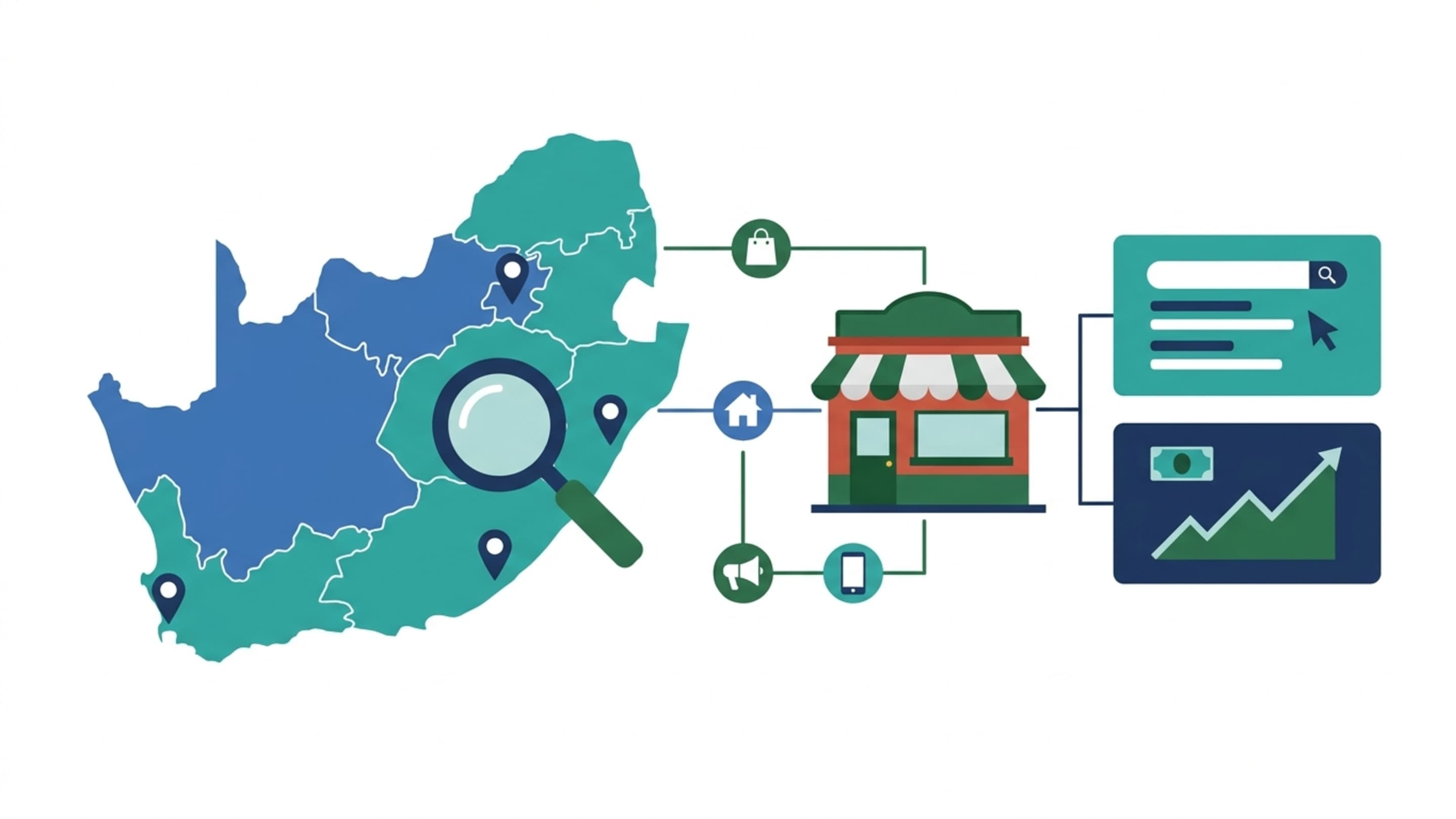
Understanding the LinkedIn Landscape for B2B Consulting
For South African B2B consulting firms, LinkedIn is not simply another paid social channel; it is often the place where budget discipline matters most. Consulting offers are usually high-consideration, involve multiple stakeholders, and require trust long before a prospect requests a proposal. That means your LinkedIn budget should not be judged by click volume alone. It should be judged by the quality of conversations, the cost of reaching buying committees, and the percentage of spend that moves a prospect from awareness to a sales-qualified opportunity.
Prebo Digital approaches LinkedIn budgets for consultants with a performance lens shaped by B2B buying behaviour. A CFO advisory firm, a management consultancy, or a transformation advisory practice will usually need different spend logic from an e-commerce brand. The reason is simple: the funnel is longer, the audience is smaller, and the cost per lead is often higher, but the downstream value can also be much larger. In practice, that means a campaign with fewer clicks can still be the better investment if it produces more meetings with the right companies.
Budget optimisation on LinkedIn starts with unit economics: cost per target account reached, cost per qualified lead, and cost per opportunity created. Without those metrics, spend decisions become guesswork.
A common mistake is to compare LinkedIn directly to Meta or Google Search using the same success criteria. LinkedIn usually costs more per click because it allows far more precise professional targeting: job title, seniority, company size, industry, skills, and even matched audiences built from CRM lists. For consulting firms in South Africa, that precision can be valuable when selling to finance directors, operations executives, founders, or procurement leaders in companies that fit a defined revenue band. The question is not whether LinkedIn is expensive; the question is whether the right budget is being used to reach the right decision-makers often enough to create a measurable pipeline.
The South African context also matters. Many local firms sell into Johannesburg, Cape Town, Durban, and increasingly into wider African or UK-linked markets. A consultant targeting enterprise clients in Sandton will need a very different media plan from a boutique strategy practice selling regional workshops to mid-market businesses. In smaller markets, audience saturation happens faster, so budget pacing, audience refreshes, and creative rotation are more important than in larger geographies.
What makes LinkedIn different for consultants?
LinkedIn works best when your service is tied to a high-value decision. For example, if your consulting firm offers digital transformation, governance, sales process improvement, or operational turnaround services, you are not looking for impulse leads. You are looking for people who can influence budget allocation. LinkedIn’s role is therefore to create structured demand, not just traffic. The right budget model should support awareness content for cold audiences, proof-led assets for warm audiences, and direct-response offers for people already familiar with your brand.
Most consulting campaigns need awareness, consideration, and conversion assets running at the same time.
Identifying Target Audiences: Who Are You Aiming For?
Audience definition is the backbone of LinkedIn budget efficiency. If your target market is too broad, you pay to reach people who will never buy. If it is too narrow, your delivery stalls and costs rise because the platform cannot find enough relevant impressions. The most efficient consulting campaigns usually start with a clearly documented ideal client profile, then expand into adjacent segments only after the first audience is performing.
For South African consulting firms, useful audience slices often include company size, role seniority, department, and location. A business consulting firm may prioritise owners, managing directors, CFOs, and heads of operations at companies with 50 to 500 employees. A specialist HR consultancy may focus on HR directors and people operations leaders. A technology advisory practice may target CIOs, IT managers, and digital transformation leads. The key is to map audience value to commercial intent, not just to broad demographic fit.
| Audience segment | Typical goal | Budget implication |
|---|---|---|
| Enterprise decision-makers | Book discovery calls or workshops | Smaller audience, higher CPM, stronger lead quality |
| Mid-market operators | Generate qualified enquiries | Balanced reach and efficiency, often best starting point |
| Warm retargeting pool | Move prospects to proposal stage | Lower cost per result, but limited scale |
In our experience, consultants often over-invest in very senior titles too early. A CEO targeting strategy can work, but only if the offer is truly board-level and the creative speaks to strategic risk, revenue expansion, or transformation outcomes. For many firms, a better first step is to target a mixed buying committee: the functional leader, the operational manager, and the budget holder. That increases the chance that your content reaches someone who can champion the conversation internally even if they are not the final approver.
Do not let audience precision become audience paralysis. A well-structured consulting campaign usually performs better with one clear primary segment and one supporting retargeting segment than with five underfunded micro-audiences.
Crafting Cost-Effective LinkedIn Ads
Cost-effective LinkedIn advertising is not about chasing the cheapest click. It is about reducing wasted impressions, improving relevance, and aligning the message with the stage of the buyer journey. For consulting firms, the ad should do more than announce a service. It should signal expertise, frame a business problem, and make the next step obvious. A poor ad asks for a meeting too early. A stronger ad offers a useful assessment, a benchmark, a briefing note, or an executive insight piece that makes the prospect comfortable enough to engage.
The most efficient creative patterns for consulting often include single-image ads, document ads, and sponsored content that leads to a focused landing page. Single-image ads work well when the message is narrow and the offer is clear. Document ads can be effective for thought leadership, especially when the goal is to qualify interest before asking for a sales conversation. Video can work, but only if the first few seconds quickly establish credibility and a business issue that matters to the target audience.
For consulting services, a useful offer often outperforms a hard sell. Consider an industry benchmark, a diagnostic checklist, or a short audit rather than leading with a generic “book a call” message.
Landing page quality directly affects budget efficiency because low conversion rates force you to pay more for every qualified enquiry. If the page does not match the ad promise, you will see higher bounce rates and weaker lead quality. A good consulting landing page should state who the service is for, what problem it solves, what the process looks like, and what happens after submission. Including proof points such as client sectors served, methodology, or a short case reference helps reduce hesitation.
When Prebo Digital audits consulting campaigns, one of the first checks is message-market fit. Is the ad speaking to a specific commercial pain point, such as pipeline stagnation, inefficient operations, or poor digital attribution? Or is it using vague claims like “transform your business”? The former creates a reason to click and enquire; the latter tends to burn budget without building trust.
Strategies for Budget Allocation: Getting the Most Bang for Your Buck
Budget allocation should reflect the reality of the consulting funnel. Most firms do not need to spend evenly across every audience or format. Instead, the budget should be staged so that the campaign can learn before it scales. A practical starting point is to reserve a meaningful share for prospecting, a smaller portion for retargeting, and a test budget for creative and offer experimentation. That structure protects performance while still creating room for growth.
| Budget bucket | Purpose | When to increase |
|---|---|---|
| Prospecting | Reach new qualified decision-makers | When lead quality is strong and frequency is controlled |
| Retargeting | Convert site visitors and engagers | When traffic volume is sufficient to sustain audience size |
| Testing | Validate offers, creatives, and audiences | When you have enough data to compare outcomes reliably |
In South Africa, consulting firms often work with monthly budgets that need to be justified to partners or directors. The right way to defend spend is by linking it to pipeline stages rather than raw clicks. For example, if a campaign generates a modest number of highly qualified leads that convert into discovery meetings and later into proposals, it may be more valuable than a larger campaign producing many low-intent submissions. Budget allocation should follow the revenue contribution of each segment, not the vanity appeal of reach.
A useful approach is to review budget by role and by offer. If one audience segment is producing strong meeting rates but weak close rates, the issue may be positioning rather than media. If another segment is producing fewer leads but better proposal quality, it may deserve more budget because it is closer to revenue. This is where strategic reporting matters: you need to see not only cost per lead, but cost per qualified opportunity and estimated pipeline value.
Measuring Success: Key Performance Indicators to Track
LinkedIn performance for consulting firms should be measured with a pipeline mindset. CTR and CPC still matter, but they are not the final answer. The better question is whether the campaign is moving the right people into sales conversations at a sustainable cost. That means tracking metrics across the entire journey, from impression quality to closed-won value where possible.
At minimum, a consulting firm should monitor cost per click, click-through rate, landing page conversion rate, cost per lead, lead-to-meeting rate, meeting-to-proposal rate, and proposal-to-close rate. If your CRM can support it, add stage velocity and opportunity value. This helps you identify whether your budget is being spent on the right audience or merely on the right-looking metrics.
For consulting, lead quality and sales progression matter more than click volume.
It is also useful to compare performance by campaign objective. Awareness campaigns may have a weaker direct conversion rate but improve retargeting efficiency later. Conversion campaigns may look more expensive at first but produce warmer enquiries. The point is to avoid isolating metrics. A campaign that seems expensive in-platform may still be profitable when assisted conversions and downstream opportunity value are included.
One practical reporting rule is to review performance in two layers: media efficiency and commercial impact. Media efficiency tells you whether the ad system is behaving well. Commercial impact tells you whether the leads are worth the spend. When both are aligned, budget decisions become much easier. When they conflict, you know where to investigate, whether that means refining the audience, reworking the offer, or improving the sales handoff.